
Memories of the Earth: a Fashion Collection Reflecting Our Relationship With the Environment

Memories of the Earth, a collection born of consciousness and intimacy, is inspired by roots as silent witnesses to time, where denim, natural dyes, and sustainability become an honest way to create and understand fashion today.
I've been at Plastic Oceans for 5 months, and in that time, my internship has become, without exaggeration, one of the most enriching experiences I've had, contributing my little bit to our planet Earth. Not only because of the learning, but also because of the clarity with which we understood how the resources around us work, including fashion, which, like any industry, has a real responsibility to the planet.
The work they do is profound, constant, and urgent; through an art form that is a favorite for many, cinema, they confront the reality of the environmental impact that can no longer be ignored, but also inspire you to create from a more conscious place.
In that context, and as a tribute to the Earth, I write this based on one of my collections as a student of Fashion and Innovation: Memories of the Earth. It began as a project that presents itself not only as clothing, but as a tangible reflection on our relationship with the environment. More than garments, they are fragments of history, pieces that evoke roots, the organic, that which remains even when everything else changes.
Tree roots are, in a way, the true memories of the earth. They remain hidden, yet they have always been there, silently traversing time, bearing witness to everything that has happened in the world. They hold history, changes, cycles, and traces that we don't see, but that sustain life as we know it. From this idea springs the essence of the collection: recognizing the invisible, that which remains, and that which, though not always visible, connects everything.
The aesthetic is built from the essential. Timeless silhouettes, clean lines, and a palette that evokes nature—earth tones, raw colors, and worn hues—create a visual language that doesn't seek to impose itself, but rather to engage in dialogue. Here, denim becomes a canvas that narrates processes, wear, and transformation.
Inspired by tree roots, the collection finds its strength in the invisible: in that which sustains, connects, and gives life without being the obvious protagonist. The garments intertwine, allowing for versatile combinations that reinforce a key idea: consume less, but better. Each look is designed to coexist, adapt, and evolve with the person who wears it.
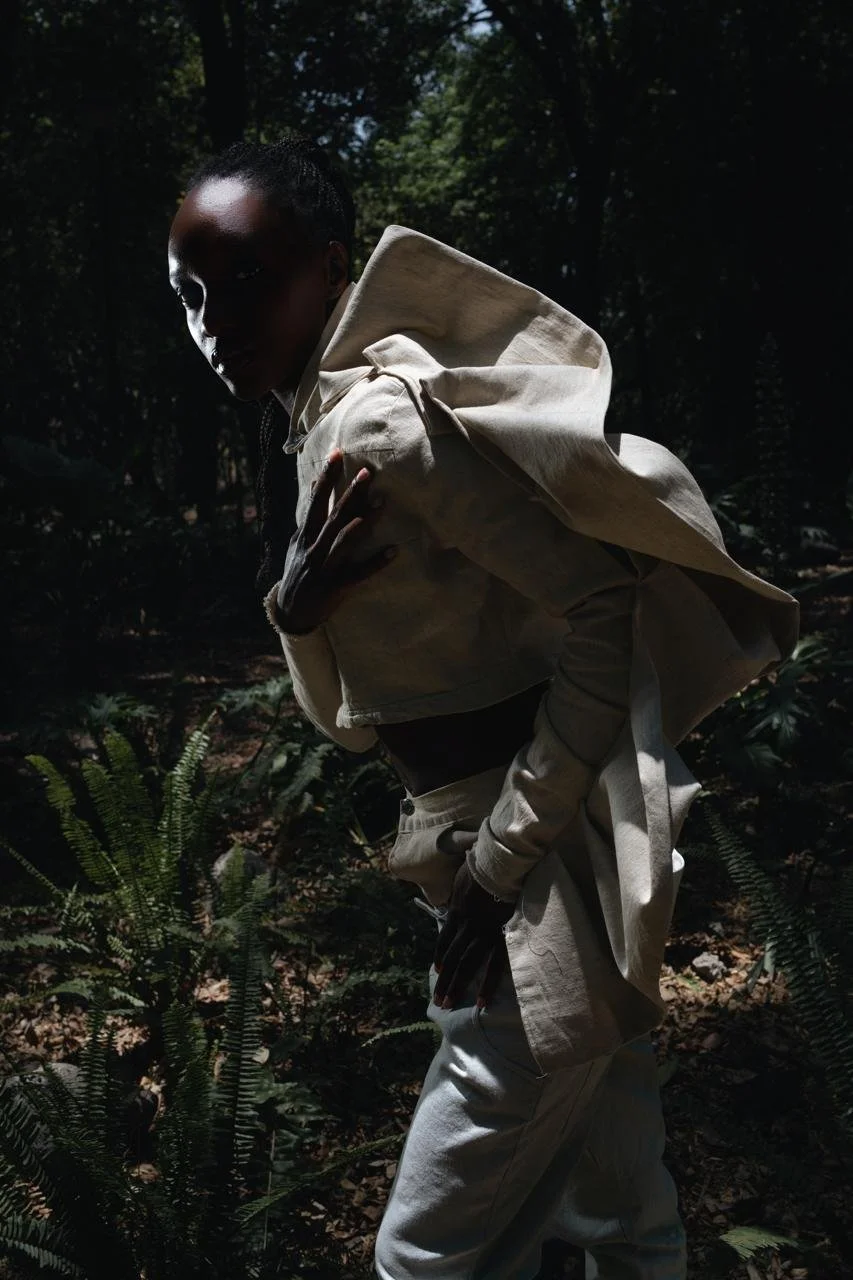
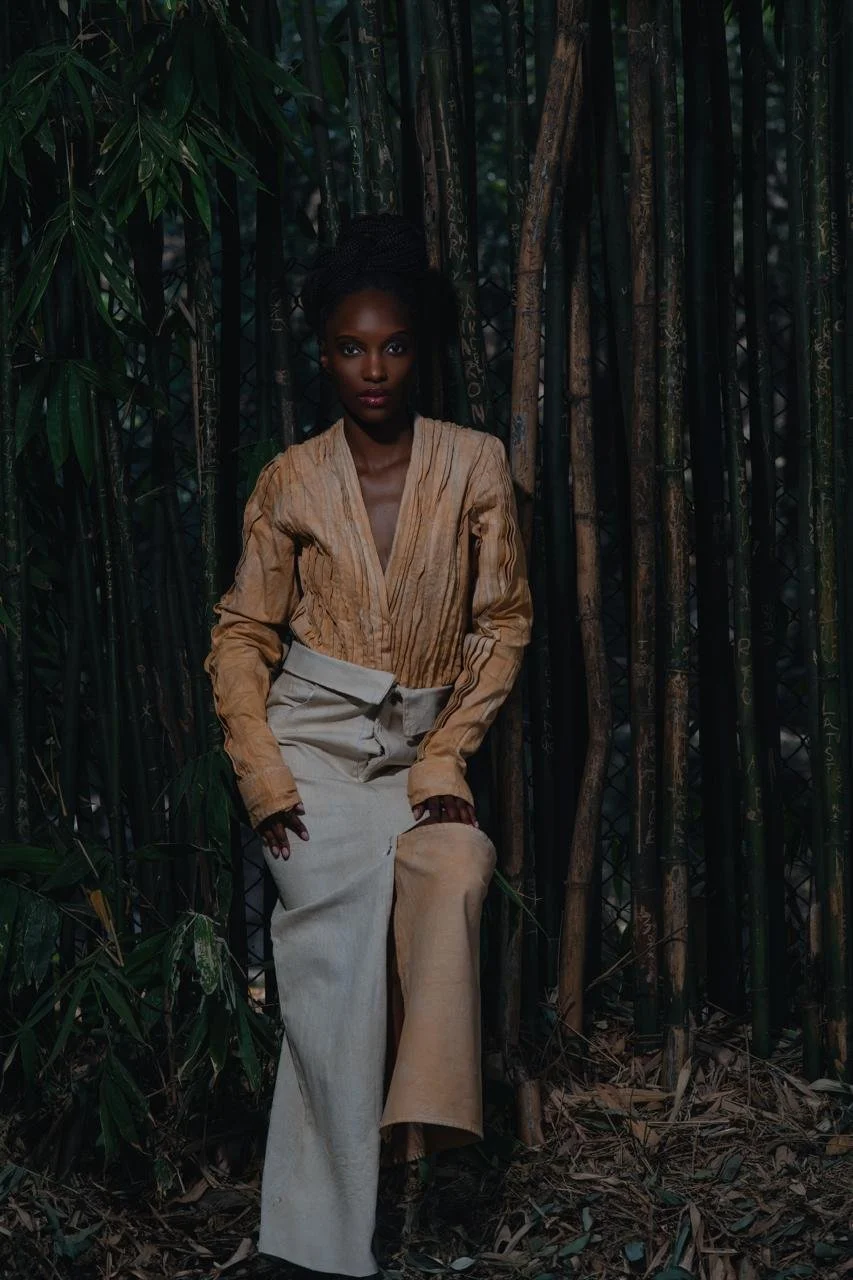

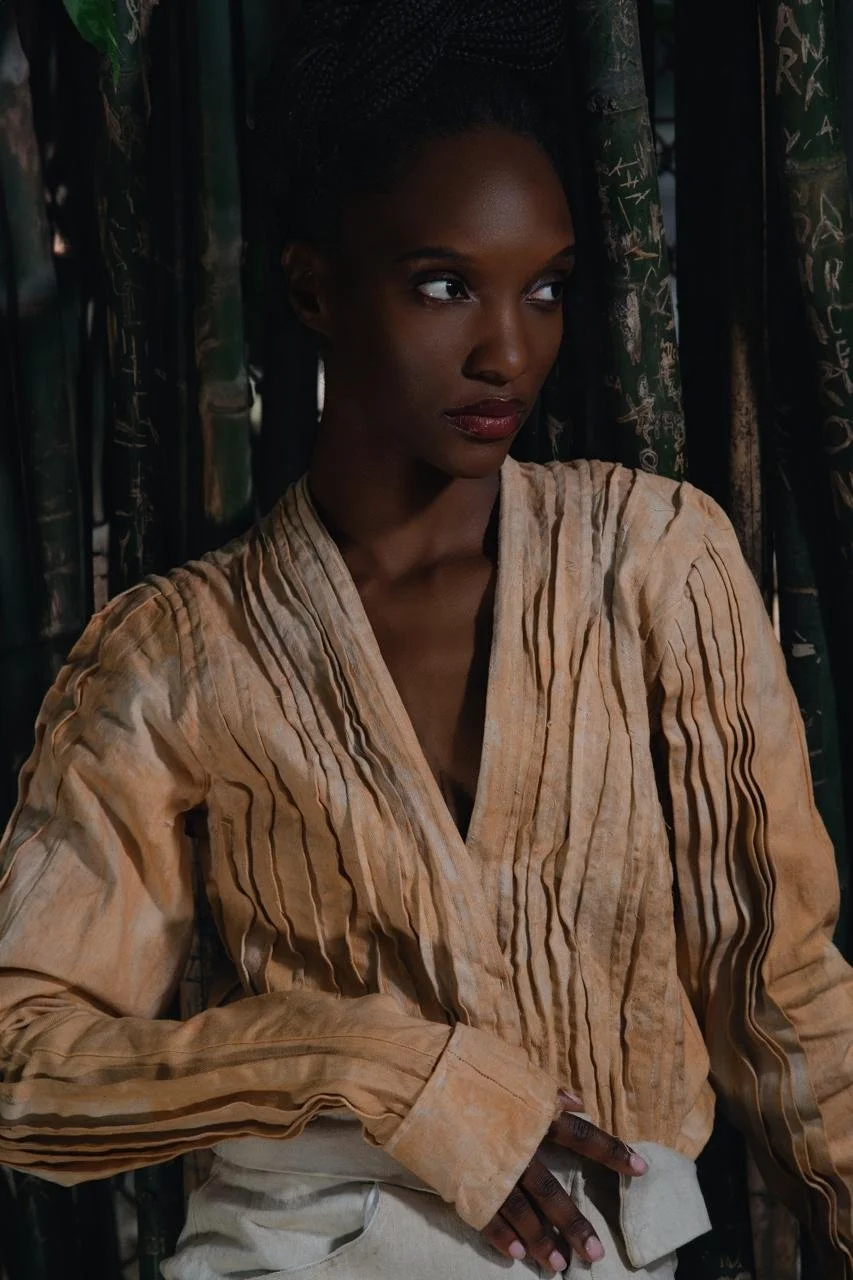
There is also a nod to materiality. The use of organic textiles and responsible processes is not presented as a superficial statement, but as a deliberate choice. The earthy tones that run through the collection were achieved using natural dyes such as coffee and turmeric, working with pigments that come directly from the environment and that, in turn, reduce the impact of the textile process, making sustainability our starting point.
This approach also made me think about The Shitthropocene, a film by David Byars that portrays in a very raw —but also very human and even ironic— way how capitalism has shaped our relationship with consumption and with ourselves, and how, even within that chaos, there is still room to question and rethink it. (Film available at Trees & Seas Film Festival 2026)
On the other hand, River Blue, directed by Roger Williams, exposes an equally urgent issue: the way the fashion industry impacts rivers and water systems globally. Through a journey along some of the world's most polluted rivers, the film shows, from the inside, how many of our garments are produced and the true cost behind it, making a direct call to rethink how we create fashion and to demand real changes in one of the most polluting industries on the planet.
Memories of the Earth doesn't seek to romanticize nature; its purpose is to remind us that we are part of it. And now that the industry faces increasingly serious environmental challenges, proposals like this open up a new narrative, one where design responds to conscience.
Because in the end, what truly matters is not just what we wear, but the story we choose to tell through it.
Trees & Seas Film Festival: Why We’re Telling This Story
In 2026, Trees & Seas is turning its lens toward fashion—not as a cycle of passing trends, but as a living system. Under the theme "Fabrics of Change: Fashion as a System," we are exploring how materials are sourced, how labor is organized, and how waste travels through land and sea.
We know the challenges: fashion is a major driver of plastic pollution and microfiber loss. But we also know the solutions are already being built. From regenerative fibers and circular design to repair cultures and indigenous wisdom, people are moving fashion from extraction to regeneration.
Buy your tickets today!
Through our hybrid format of online streaming and global in-person screenings, your story becomes a tool for dialogue and collective action in front of more than 15,000 annual participants.
Ready to rethink what fashion is and what it could become?
Let’s show the world that a system can be redesigned when we start seeing the threads that connect us all.
Festival Dates: September 18-27, 2026
Discount Code: Use code OCEAN for 25% off your entry fee this Ocean’s Month.
Explore the festival at treesandseasfilmfestival.com
Written by: Maria Fernanda Marin Badillo, intern at Plastic Oceans
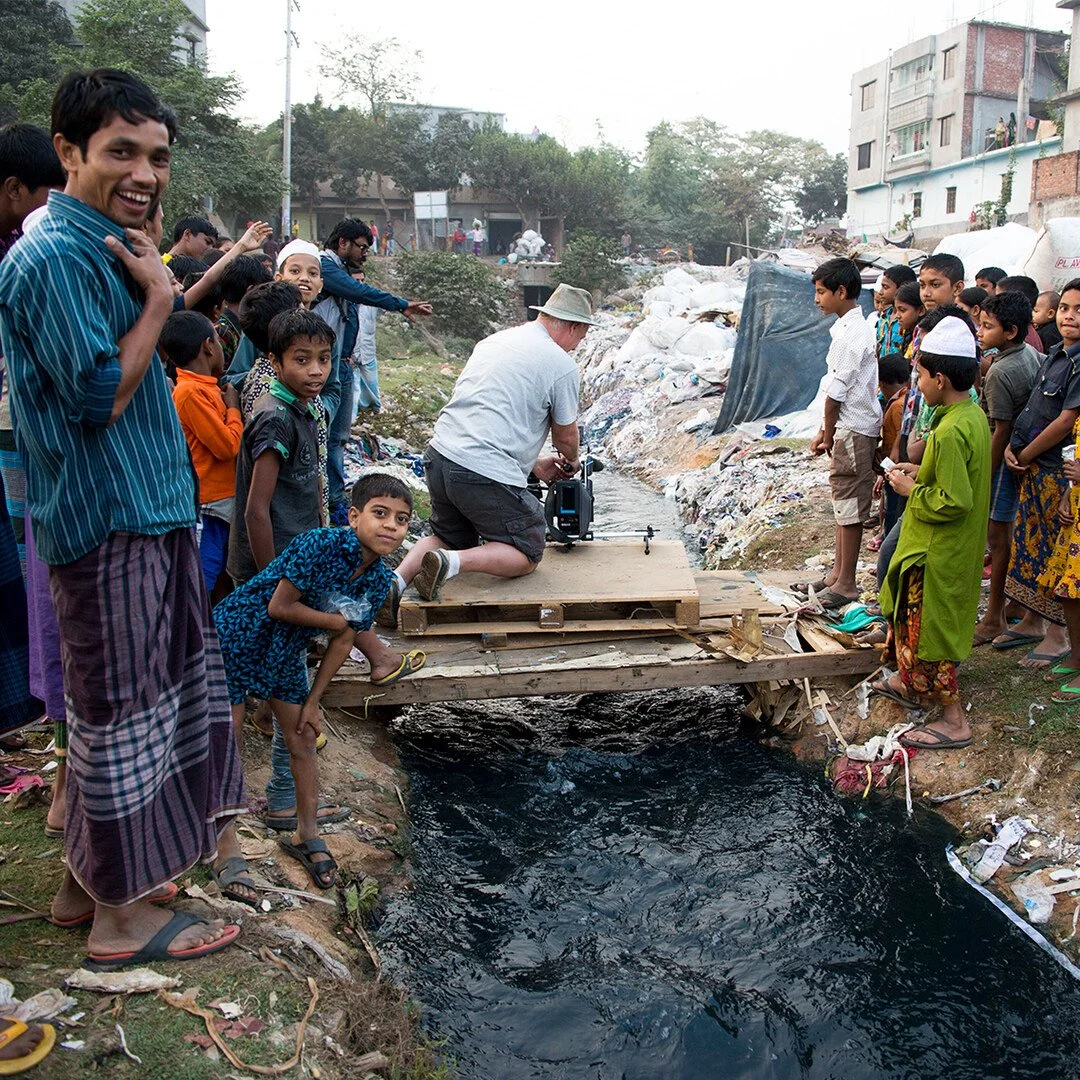
Film: RiverBlue
Trees & Seas Film Festival
The Trees & Seas Film Festival is an international hybrid initiative that connects global audiences through both online streaming and in-person events hosted by community partners around the world.
This approach ensures accessibility while creating meaningful, localized connections through storytelling. We bring together local communities by using film to inspire conversations, collective action, resilience, and real-world impact.
Use code OCEAN for 25% off your entry fee this Ocean’s Month.